
Trim the waste from your packaging with PackTrim Optimization.
The PackTrim Optimization™ Program from Wisconsin Lumber & Pallet lets us work as an independent third party between your business and your current packaging vendor. This is a win-win-win: your company saves, we are paid from a share of those documented savings, and your vendor often ends up with a better margin—without losing the account.
This service is for companies that:
- Spend over $300,000 annually on wood packaging,
- Want to keep their current vendor, and
- Are serious about optimizing their packaging for cost savings and sustainability.
- Don’t want any upfront cost, but are willing to pay based on savings over time.
The program focuses on material substitution, dimensional redesign, and labor efficiency—unlocking savings without compromising strength or safety. If your volume qualifies, changes to your current wood pallets, crates, or boxes can produce meaningful savings and a smaller environmental impact.
If you don’t qualify, we may still come look at the work. In that case we would likely design and source the products ourselves through our vetted network of pallet companies and sawmills. There is no upfront charge for that work either, but those designs and quotes are our own.
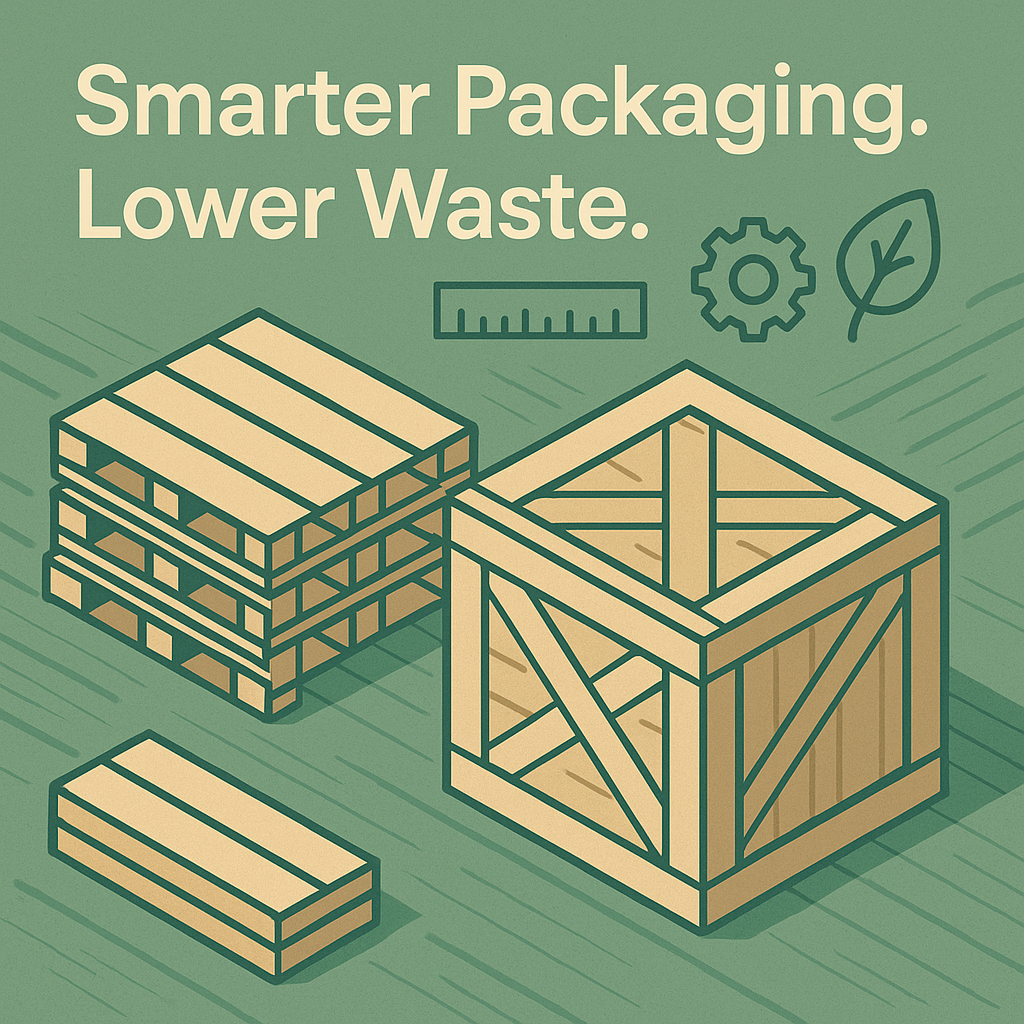
Why Packaging Optimization Matters
Using the same packaging for decades “because it works” likely means your package is over-built. If a one-off mishandling led someone to add material, you may still be paying for that fix every year. Packaging is often an afterthought unless there is a problem, yet it is usually among a manufacturer’s highest expenses.
PackTrim Optimization™ means reducing material cost, finding shipping efficiencies, and reducing packaging labor and assembly. We work with your plant managers, engineers, and existing vendors on improvements that cut cost and support your sustainability goals. In November 2026, our founder, Ryan Ziegler, spoke at the Sustainable Business Council on turning packaging from a cost center into a competitive advantage. PackTrim Optimization™ is how we put that idea to work with your current vendor still in place.
How PackTrim Optimization™ Works
Here is the typical path from the first conversation to documented savings. Timing depends on company size, project complexity, and scope.
1. Discovery call. We learn your packaging, volumes, vendors, and goals, and confirm whether the shared-savings model is a fit.
2. Packaging audit and walkthrough. We review how pallets, crates, and boxes are specified, built, loaded, and shipped. A plant walkthrough is standard when both parties agree it makes sense; we won’t fly across the country for a small project.
3. Spec and drawing review. We compare current drawings, bills of material, and cut lists with how the package actually performs.
4. Recommendations. You get proposed changes—what to keep, what to trim, and why. Our proprietary, custom-built in-house design optimization tool helps us optimize cutting yield and inside and outside package dimensions.
5. Vendor quoting, trials, and testing. Your current vendor quotes the revised design. Testing is standard when both parties agree it makes sense, so you can confirm strength, handling, and fit before a full changeover.
6. Implementation. Approved changes go into production with your existing vendor. We stay involved so the new spec is built as designed.
7. Savings tracking and reporting. Verified material savings on the products we redesigned are measured from invoices and tracked for a set 12- or 24-month period, with terms set in the agreement. Once we receive the first shared-savings payment, all drawings and work done for you up to that point are shared with you.
What We Look For
A PackTrim Optimization™ audit looks for common sources of waste in wood packaging, including:
- Lumber that is thicker or heavier than the load requires
- Extra deckboards, stringers, or blocks that do not add useful strength
- More fasteners than the joint or assembly needs
- Cut lengths that waste yield from standard 8-, 10-, 12-, 14-, and 16-foot lumber (which generally comes in 2-foot increments)
- Crate or pallet dimensions that leave unused space in a trailer or container
- One-off damage fixes that were added after a single incident and never taken back out
- Inconsistent specs across plants or vendors for the same or similar parts
- ISPM 15 and other export requirements that should be met without over-building the package
We look at the package as it is used, not only as it is drawn.
What We Do
We start with a packaging audit and work with your teams and supplier(s) to cut cost through efficiency and waste reduction—without disrupting your supply chain.
Material Optimization
We look for excess wood, fasteners, and other materials that can come out, reducing direct spend. Verified material savings on the products we redesigned are the only savings that count toward the shared-savings model, and they are measured from invoices. We also consider alternative materials, including different wood species or corrugated, metal, or plastic.
Dimension/Freight Optimization
We evaluate pallet and crate dimensions to better use trailer and container space and reduce freight costs. Findings go to your logistics team and plant staff. Lumber generally comes in 2-foot increments of 8-10-12-14-16′. Cut lengths can often be adjusted for better yield so you are not paying for scrap. Freight savings do not count toward shared savings; they are extra savings you keep.
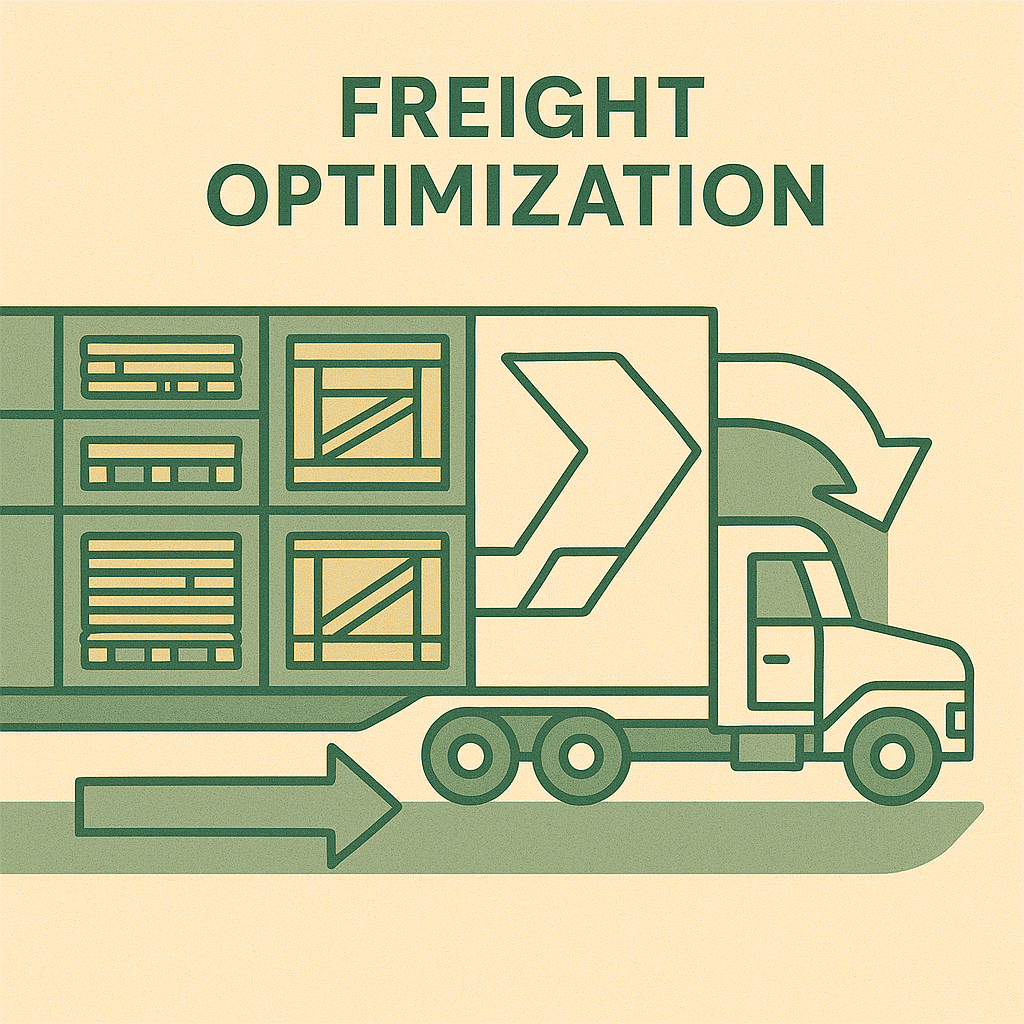
Labor Optimization
We still optimize for loading and unloading during the project, and we suggest changes that reduce loading or unloading time, improve stacking or handling, and increase plant throughput. Labor savings do not count toward shared savings; they are extra savings you keep. We stay out of hard-to-track labor so there is no gray area in the numbers.
Why an Independent Third Party
Your current vendor is set up to build what you already buy. Asking them to redesign the package can put them in an awkward spot: a leaner design may look like they are talking themselves out of material, even when the job would run better. Wisconsin Lumber & Pallet is not trying to take the account. PackTrim Optimization™ sits between your team and the vendor you already trust. We review specs, drawings, freight, and floor practice, then work with that vendor on changes you approve.
Why Your Current Vendor Wins Too
Keeping your current vendor is one of the program’s starting rules. A tighter, better-yielding design is often easier to build and uses material more cleanly, so vendors frequently end up with a healthier margin—not a smaller account. Your plant keeps a familiar supplier. The vendor keeps the work, and often a better-running job. We are paid from a share of the verified material savings the three of us create together. That is the win-win-win.
Only Pay for Real Results
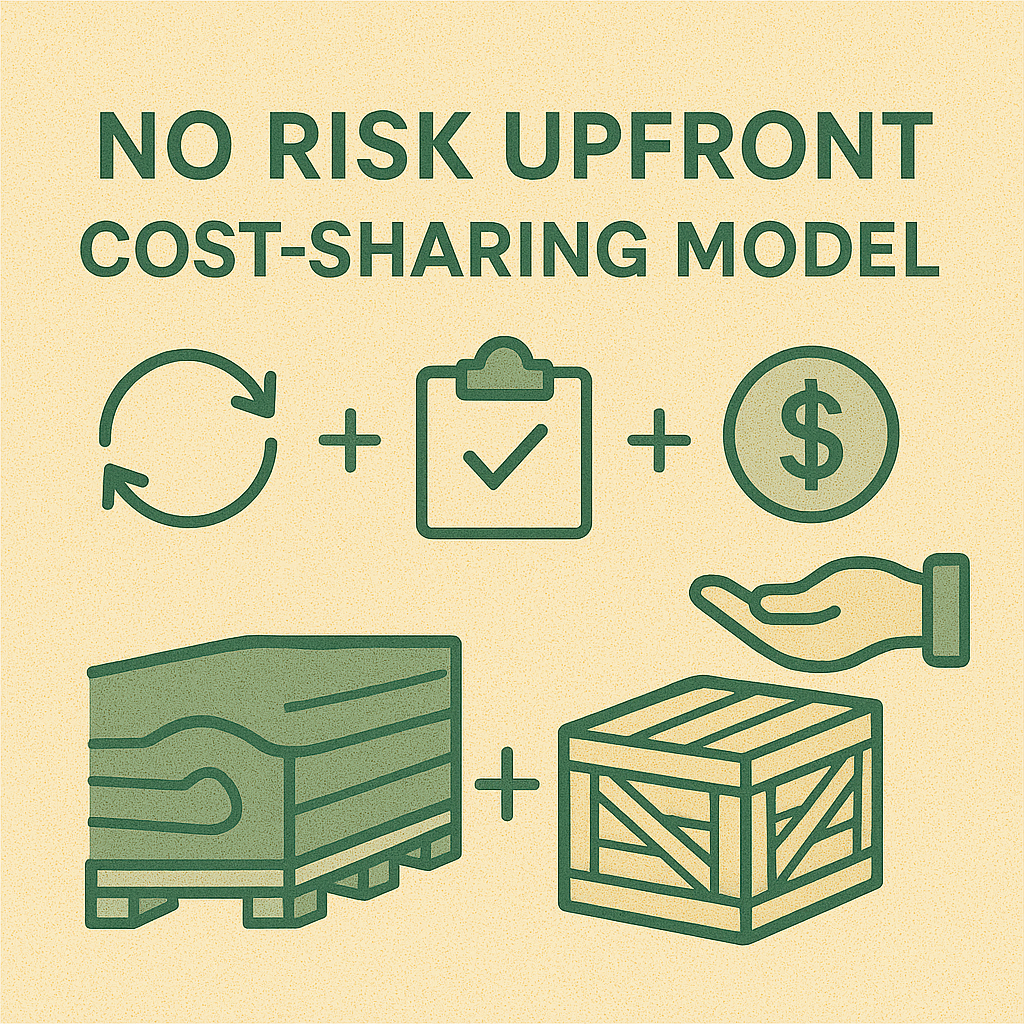
We operate on a shared-savings model. You pay a share of verified material savings on the products we redesigned, for a set 12- or 24-month period, with terms set in the agreement. There is no upfront cost unless travel requires an overnight stay; that is when travel is billed.
All shared savings are backed by invoices, so the numbers are concrete and everyone agrees on them.
- No risk. No pressure.
- Savings are tracked over a set 12- or 24-month period.
- After that period, tracking stops. Savings from then on are yours. If it makes sense for both parties, tracking can continue for a fixed fee, or you can keep tracking on your own (or not at all).
What counts toward shared savings
Only verified material savings on the products we redesigned count toward shared savings. Those figures come from invoices on those products.
Freight and labor savings do not count. They are extra savings you keep. We deliberately stay out of gray areas such as mixed freight loads or hard-to-track labor. We still optimize for loading and unloading, and for trailer and container space, during the project; any freight or labor savings from that work stay with you.
What You Get
A typical PackTrim Optimization™ engagement delivers:
- Findings and recommendations that explain where waste is showing up and why
- Redesigned specs and drawings, shared with you after the first shared-savings payment
- Vendor quote comparisons for the current design versus the proposed design
- Savings documentation based on invoices for the products we redesigned
What We Need From You
To do the work well, we typically need:
- Current specs and drawings (and photos if drawings are incomplete)
- Annual volumes by package or part family
- Recent invoices or vendor quotes, so we have a baseline
- Plant access for a walkthrough when both parties agree it makes sense
Your plant managers, engineers, procurement team, and current vendor stay in the loop.
Built for Sustainability
PackTrim Optimization™ supports your environmental goals and contributes to our 1-2-3 Conservation Program (for invoiced amounts). Together, we can help reduce packaging waste and support global forest conservation through our nonprofit partners like Rainforest Trust. The aim is not only to reduce unnecessary impact, but to help reverse it.
Documented material reductions also give sustainability and ESG teams something they can report: less wood used, less waste generated, and a clearer baseline than a packaging change with no record behind it.
Is PackTrim Optimization Right for You?
This program is ideal for:
- Medium to large companies using wood pallets, crates, or boxes
- Manufacturers or distributors managing multiple facilities or vendors
- Plants with overbuilt, inconsistent, or wasteful packaging
- Teams with cost or ESG targets who want fast, documentable wins
- Procurement or operations managers looking for risk-free expert support
Quick answers
Do I have to switch vendors? No. PackTrim Optimization™ is built so you can keep your current vendor. We work as an independent third party with your team and that vendor. You are not required to switch to Wisconsin Lumber & Pallet or a new supplier.
What does it cost? There is no upfront fee if you qualify, unless travel requires an overnight stay—that is when travel is billed. You pay a share of verified material savings on the products we redesigned, for a set 12- or 24-month period, with terms set in the agreement. After that period, tracking stops, and savings from then on are yours. If it makes sense for both parties, tracking can continue for a fixed fee, or you can keep tracking on your own (or not at all). Once we receive the first shared-savings payment, all drawings and work done for you up to that point are shared with you.
How are savings verified? Only verified material savings on the products we redesigned count toward shared savings. Those are measured from invoices so the numbers are concrete and everyone agrees on them. Freight and labor savings do not count; they are extra savings you keep. We deliberately stay out of gray areas such as mixed freight loads or hard-to-track labor.
How long does it take? It depends on company size, project complexity, and scope. Some projects are phased in over a year; others review the full SKU list at once. Discovery to recommendations typically takes a few weeks, and implementation can start as soon as a few weeks after that. Larger companies’ internal approval processes often add time; more often than not, we are waiting on customer approvals before testing and implementation.
What if we spend under $300,000 a year on wood packaging? The shared-savings model is for companies spending over $300,000 a year on wood packaging. If you don’t qualify, we may still come look, but we would likely design and source the products ourselves through our vetted network of pallet companies and sawmills. There is no upfront charge for that work either, but those designs and quotes are our own.
Will changes affect strength or damage rates? The program aims to unlock savings without compromising strength or safety. Changes are reviewed with your team. Plant walkthroughs and testing are standard when both parties agree they make sense, and a trial or test is used before a full changeover when that is the case.
Do you work with corrugated, plastic, or metal, or only wood? Wood packaging is the core of the program, but we also consider other materials, including different wood species or corrugated, metal, or plastic, when that would improve cost, performance, or both.
Does this help with ESG or sustainability reporting? Yes. Using less material supports waste-reduction and forest-related goals, and you get documentation for internal reporting. PackTrim Optimization™ also contributes to our 1-2-3 Conservation Program (for invoiced amounts). We do not invent impact numbers for your reports.
Get Started
Let’s trim the waste from your packaging. Contact us to schedule a discovery call, or call 414-520-3366, and learn how PackTrim Optimization™ can help your company save money, improve sustainability, and streamline your packaging strategy.